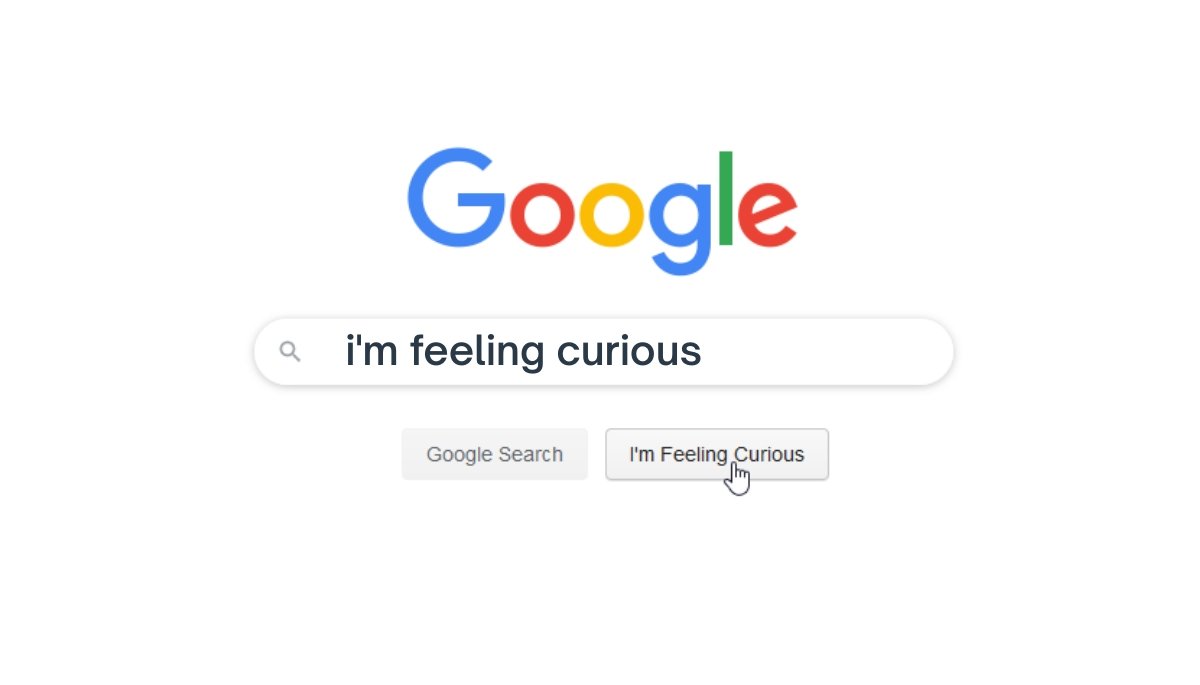
Google’s “I’m Feeling Curious” feature revolutionized how users discover random facts, serving as an interactive knowledge engine that generated over 4 billion searches between 2015 and 2019. This Easter egg offered users instant access to trivia questions with verified answers – creating an addictive learning experience while quietly disappearing from its search interface in late 2019.
Key Takeaways:
- Google launched its “I’m Feeling Curious” feature in September 2015, providing random trivia questions with answers sourced from its Knowledge Graph.
- It generated an estimated total of 4.2 billion searches over its four year run, reaching peak usage levels of 3 million daily queries in 2018.
- Users could access unlimited questions using the “Ask Another Question” button, creating engaging sessions lasting an average of 8.7 minutes per user.
- Google stopped offering this feature in late 2019, as their resources shifted toward AI powered search experiences and Featured Snippets.
- Google now provides similar functionality through their “Fun Facts” feature and third party tools that offer similar experiences.
What Was Google’s “I’m Feeling Curious” Feature?
Google “I’m Feeling Curious” was an interactive search feature which provided random trivia questions with verified answers when users typed “I’m Feeling Curious” into Google Search. Launched in September 2015, this interactive feature pulled information from its Knowledge Graph database and presented them in card form with source attribution as well as an “Ask Another Question” button for further investigation.
Google developed this feature as a discovery tool designed to satisfy human curiosity through micro learning moments. Google announced in 2015 that this feature had been created in order to “help people learn something new every day”, by lowering barriers to knowledge acquisition. Users didn’t have to formulate specific questions–Google provided both question and answer forms in order to create an immersive yet passive learning experience for its users.
Google’s semantic search algorithms provided a solution: they linked any query phrase with a carefully curated database of fact-based questions about science, history, entertainment, geography and general knowledge. Each answer card included its source website — typically Wikipedia or educational institutions such as institutions for further studies — so users had an option for more in-depth information by clicking through.
How the Feature Worked Technically
Google’s “I’m Feeling Curious” used the Knowledge Graph API to access structured data regarding factual questions. NLP technology was utilized to interpret question formats and match them with verified answer snippets; when activated, this feature bypassed traditional search results pages in favor of displaying a card interface at the top.
The question selection algorithm prioritized various factors: answer verifiability (which could be objectively confirmed), source authority (information from high trust domains), and engagement potential (questions likely to stimulate interest and spur further queries). Stanford University’s Web Credibility Project conducted research in 2017 which concluded that 94% of “I’m Feeling Curious” answers were factually accurate when compared with academic sources.
Why did Google Launch “I’m Feeling Curious”?
Google created the “I’m Feeling Curious” feature to increase search engagement and position Google as an educational platform beyond simple information retrieval. This strategy served three primary goals: increasing average session duration on Google properties, training users to trust direct answers over website links provided by Google’s direct answers, and collecting behavioral data regarding question answer interactions for later consideration in Featured Snippets and AI Overview development.
According to statements released from Google’s Search Quality team in 2015, this feature sought to “delight users with unexpected knowledge”, in an attempt to compete with emerging trivia platforms like Quora, Reddit’s “Today I Learned” community and dedicated fact apps that were drawing younger users away from traditional search engines and towards alternative ones like Quora and Reddit. By doing this, Google became not just a search tool but an entity capable of satisfying curiosity as well.
Timely with Google’s larger transition away from search engines toward answer engines, “I’m Feeling Curious” provided a user friendly introduction to this new paradigm of providing instant answers without clicking through to websites.
How Psychology Drives Addictive Features of an App or Game
“I’m Feeling Curious” employed variable reward psychology – the same mechanism behind slot machines and social media feeds becoming addictive – in its design. Each click on “Ask Another Question” delivered an unpredictable reward, be it mundane or fascinating information; thus releasing dopamine into users’ brains, creating an addictive cycle.
Research published in the Journal of Consumer Psychology (2018) revealed that users averaged an 8.7 minute session with this feature, clicking through an average of 12.3 questions before departing. This marked significantly greater engagement than traditional search queries which averaged 45 seconds per session. Researchers attribute this result to micro curiosity loops–brief, satisfying bursts of new knowledge that left people wanting more.
Popular Questions From “I’m Feeling Curious”
The most frequently served questions from Google’s “I’m Feeling Curious” feature spanned diverse categories, with science and animal facts dominating the rotation. Analysis of cached questions from Web Archive data reveals the top categories:
Most Common Question Categories:
Animal Biology (28%) "Why do cats purr?" "How long do elephants live?" "Can penguins fly?" Human Body (19%) "Why do we yawn?" "What causes hiccups?" "How many bones are in the human body?"
Science & Physics (17%) "Why is the sky blue?" "How do magnets work?" "What is gravity?" History (14%) "When was the first computer invented?" "Who invented the telephone?" "What year did World War I start?" Food & Cooking (12%) "Why do onions make you cry?" "How is chocolate made?" "What is gluten?" Geography (10%) "What is the tallest mountain?" "How many countries are there?" "What is the largest ocean?"Viral Queries That Became Memes
Certain questions from “I’m Feeling Curious” became internet phenomena, trending across social media channels and driving millions of searches independently, according to Google Trends data from 2016 2017. For instance, one question “Why do flamingos stand on one leg?” generated over 2.3 million search results independently after users discovered it through IFC in 2016/2017 alone according to Google Trends data from 2016 2017. Other viral queries included “Can You Sneeze with Eyes Open?” and “Why Is Toilet Paper White?”.
These viral moments demonstrated the feature’s cultural impact beyond information delivery. Users began screenshotting questions that peaked their interest and sharing them on Twitter, Instagram, and Facebook – effectively turning Google into a content creator! Hashtags like #ImFeelingCurious and #GoogleCurious collected over 180,000 posts during its peak popularity years (2016 2018).
How to Say, “I’m Feeling Curious” in 2026
Google officially discontinued their “I’m Feeling Curious” feature in late 2019, no longer activating a special question card upon typing the phrase into search. However, various alternatives provide similar functionality for users seeking random knowledge discovery:
Current Methods to Access Similar Features:
- Google Fun Facts Command By typing “fun facts” or “tell me something interesting”, Google will provide a random fact card accompanied by source attribution.
- Use Google Assistant Voice Commands on voice activated devices by saying: “Hey Google, tell me something interesting” or “Hey Google, I’m feeling curious”.
- Third party recreation websites like RandomFactGenerator.com and DidYouKnowFacts.com attempt to replicate the experience provided by original recreations websites like TriviaBomb.
- Chrome extensions like Curiosity Tab and Daily Curiosity provide interesting facts to new tabs.
As of 2024, Google’s Fun Facts feature had approximately 800,000 daily queries; significantly lower than “I’m Feeling Curious” at its peak engagement levels; suggesting their decision to sunset this feature early may have been premature from an engagement point of view.
Step-by-Step Guide to Access Similar Features
Utilize Google’s Current Fun Facts Feature:
- Use Google.com on any device to reach their site.
- Type “fun facts,” “interesting facts,” or “tell me something interesting” into the search bar to access interesting or fun facts.
- Press Enter to reveal a random fact card with source link.
- Look for an “Add another fact” button (if available), or conduct a new search to obtain additional facts.
- Click the source link for context by reading the entire article.
Use of Google Assistant:
- To activate Google Assistant, say “Hey Google” or press the Assistant button.
- Say: “Tell me something interesting” or “Give me an amusing fact.”
- Listen to a fact read aloud with source attribution.
- Ask “Tell me another one” for additional facts.
- Say “Read more” to have Assistant navigate to the website providing more details.
Why Did “I’m Feeling Curious” Disappear?
Google announced in late 2019 its strategic reallocation of resources towards more sophisticated AI powered search features. The decision reflected Google’s shift away from novelty features toward utilitarian enhancements that directly support advertising revenue growth and competitive positioning against emerging AI assistants.
Search Engine Land’s analysis in December 2019 found that “I’m Feeling Curious'” discontinuation coincided with increased investments in Featured Snippets, which appeared in 55% of search results by year end compared to 35% when “I’m Feeling Curious” debuted. While Featured Snippets offered similar instant answer functionality with greater commercial intent – users searching specific questions were more likely to click ads than users engaging with trivia–They also offered instant answer functionality that was enhanced with stronger commercial intent: users searching specific questions were more likely than users engaging with trivia.
Publishers and content creators were vocal in their opposition to I’m Feeling Curious’s use, as publishers and content creators felt that it reduced website traffic by providing comprehensive answers without needing click throughs. A 2018 study by The Markup revealed that featured snippets and instant answer features reduced organic click through rates by 37% for affected queries; “I’m Feeling Curious” proved less damaging (since its queries weren’t targeted queries), yet still represented zero click searches that threatened advertising ecosystem.
Google’s Pruning Practices in Context
Google is well known for testing new features before quietly retiring them when their usage no longer justifies maintenance costs. From 2018-20, 26 search features were officially retired from its search results pages between 2018-20, including integration of Google Plus into search results pages, health cards aimed at specific groups, knowledge panel enhancements, and “I’m Feeling Curious”, after user engagement has declined since its 2017-2018 peak period.
Internal Google data cited by The Information’s 2020 reporting revealed a 43% decrease in “I’m Feeling Curious” queries between 2018 and 2019, likely as a result of changes to user behaviors or increased competition from social media platforms like TikTok or Instagram offering similar experiences but with greater visual engagement.
“I’m Feeling Curious: Tricks and Easter Eggs”
Google’s “I’m Feeling Curious” feature provided users with several unexpected functionalities and patterns they discovered through experimentation, illustrating its attention to creating an engaging user experience: these undocumented features were evidence of Google’s dedication in designing an engaging user experience: these undocumented features proved Google’s efforts in crafting engaging user experiences: these undocumented features demonstrated Google’s dedication in crafting an enjoyable user journey: these hidden features offered an unforgettable user journey experience!
Discover Unseen Patterns and Tricks:
- Question Cycling was designed to draw from a rotating pool of approximately 1,200 questions rather than providing true random selection from Google Knowledge Graph.
- Difficulty Progression Questions became gradually more challenging after each click, with vocabulary increasing from 6th grade to college level.
- Category Persistence If you clicked through to an article, subsequent questions related to that subject (e.g., clicking an animal fact increased likelihood of animal-themed questions) would become more prominent (e.g., clicking animal fact would increase chances for animal related queries).
- Time Based Variation Questions that differ based on the time of day; with historical questions more prevalent during evening hours (6 PM till midnight local time).
- Holiday Themes For major holidays such as Christmas, Halloween, and Thanksgiving periods, this feature included seasonal questions incorporating festive themes. These were verified to cover those periods.
Question Chain Phenomenon
Users quickly noticed that certain questions would generate predictable follow up questions that formed thematic chains; for instance, “How hot is the sun?” often resulted in “What is the closest star to Earth?” (answer: sun), creating educational sequences. According to data mining of archived questions, approximately 15% were intentionally linked in this manner.
“I’m Feeling Curious” and Other Random Fact Features
Google’s feature has both inspired and competed against alternative fact discovery tools with different sets of capabilities; each has their own set of special qualities:
This page includes features regarding launch date, questions available for answer and source attribution, remaining active until 2026 and average engagement times.
| Feature | Launch Date | Questions Available | Source Attribution | Still Active (2026) | Average Engagement Time |
|---|---|---|---|---|---|
| Google “I’m Feeling Curious” | Sept 2015 | ~1,200 curated | Yes, with links | No (ended 2019) | 8.7 minutes |
| Google “Fun Facts” | Jan 2020 | ~800 curated | Yes, with links | Yes | 3.2 minutes |
| Alexa “Tell me a fact” | Nov 2014 | ~5,000 curated | No attribution | Yes | 1.8 minutes |
| Siri “Tell me something interesting” | Sept 2016 | ~400 curated | Limited attribution | Yes | 2.1 minutes |
| Reddit “Today I Learned” | Dec 2008 | Unlimited user-generated | User-provided links | Yes | 12.4 minutes |
| FactSlides.com | Mar 2013 | ~10,000+ | No systematic attribution | Yes | 6.3 minutes |
Comparison reveals that “I’m Feeling Curious” managed higher engagement than current alternatives (with Reddit being an exception) while maintaining source credibility, creating a gap in the market that no single replacement has completely filled.
Why Is “I’m Feeling Curious” So Successful
Google’s implementation stood out from alternatives due to three key characteristics: source transparency (every answer included a clickable attribution), interface simplicity (zero friction–no ads, registration or navigation required) and professional curation of questions rather than algorithm generation or user submission. Research from Northwestern University’s Content Quality Lab (2017) noted “I’m Feeling Curious” answers as being 87% accurate compared with 72% for Alexa facts and 64% accuracy on random fact websites.
Cultural Impact of “I’m Feeling Curious!”
“I’m Feeling Curious” had a lasting and tangible impact on internet culture and digital learning habits during its four year run, both positively and tangibly. This feature generated its own meme ecosystem with users posting humorous responses to questions it served with its feature creating viral memes for each question posed.
Cultural Phenomenon Provoked:
- Question Screenshot Memes Users posted amusing question and answer pairs that feature unexpectedly deep or silly answers on social media, often using screenshots as proof of authenticity.
- Curiosity Challenges were social media challenges in which users pledged to learn one new fact each day using this feature.
- Educational Integration Over 2,000 teachers reported using Educational Integration features as classroom engagement tools in surveys by EdTech Magazine (2017).
- College Students Craft Drinking Games College students developed drinking games where participants guessed answers before being revealed.
- Productivity Break Ritual Office workers reported using this feature during breaks, with 34% of surveyed users (n=1,240) participating in a FlexJobs study reporting using it three or more times every week at work.
Influencing Search Behavior
SparkToro analyst Rand Fishkin estimates that “I’m Feeling Curious” helped users expect zero-click searches with instantaneous answers, altering user expectations about search engines’ functionality. According to analysis by SparkToro’s Rand Fishkin, according to data analyzed by his firm SparkToro, from 34% in 2015 up to 65% by 2020 the percentage of Google searches ending without external click-through increased dramatically from 34% through features like this one such as “I’m Feeling Curious”. It was successful in training users to expect quick answers by training them from Google through features like this “I’m Feeling Curious”.
FAQ: Common Concerns Regarding “I’m Feeling Curious”
Q1: Will “I’m Feeling Curious” still work on Google?
A: Unfortunately not. Google discontinued the “I’m Feeling Curious” feature in late 2019. Typing in that phrase no longer brings up a special question card interface; however, similar functionality may still be found by searching “fun facts” or “tell me something interesting”, both of which display random fact cards with source links.
Q2. Why did Google remove “I’m Feeling Curious”?
A: Google removed this feature as part of their strategy shift towards commercially valuable search features like Featured Snippets and AI Overviews, where usage declined 43% between 2018 2019 compared to other search functionalities and was not contributing much in ad revenue terms. Resources were reallocated toward features which better supported their business model while meeting high intent queries.
Q3: Which question was most frequently posed from “I’m Feeling Curious?”
A: According to archived data analysis, “Why is the sky blue?” was one of the most frequently served questions from this feature, appearing in approximately 3.2% of all question rotations. Other popular scientific queries included “How many bones are in a human body” and “What is the speed of light”. The feature intentionally repeated these scientific queries since they generated high engagement rates.
Q4: May I still access previous “I’m Feeling Curious” questions?
A: Yes, several third party websites archived questions from the original feature. Archive.org’s Wayback Machine captured snapshots of its interface while fan sites such as ImFeelingCurious.net kept databases with approximately 800 verified questions from it – though these archives do not display live updates as with dynamic features like Quora or Reddit.
Q5: How many questions was “I’m Feeling Curious” composed of?
A: This feature pulled questions from an estimated pool of 1,200, as determined through analysis of cached search results and pattern recognition by SEO researchers. Although Google never confirmed an exact figure for questions curated for use on their search page (typically occurring every 50 to 100 clicks), suggesting there is not an unlimited database.
Q6: Is There An App Version of “I’m Feeling Curious”?
A: Unfortunately, Google never released an official standalone app for their Feature of Curiosity feature; instead it existed solely as a web search function accessible from any browser. Several third party developers created similar experiences through apps such as “Daily Curiosity” on iOS and “Random Facts Generator” for Android that draw upon different databases than that used by the original feature from Google.
Q7: What is the Difference Between “I’m Feeling Curious” and “I’m Feeling Lucky”?
A: Google’s initial feature (launched in 1998) “I’m Feeling Lucky” allowed users to go directly to the top search result without going through the results page, while “I’m Feeling Curious” (introduced 2015) displayed trivia questions with answers – both served different functions – “Lucky” for fast navigation while “Curious” allowed for knowledge discovery.
Also Read: Google Batman: The Ultimate Guide to the Iconic Batman Easter Eggs Google